
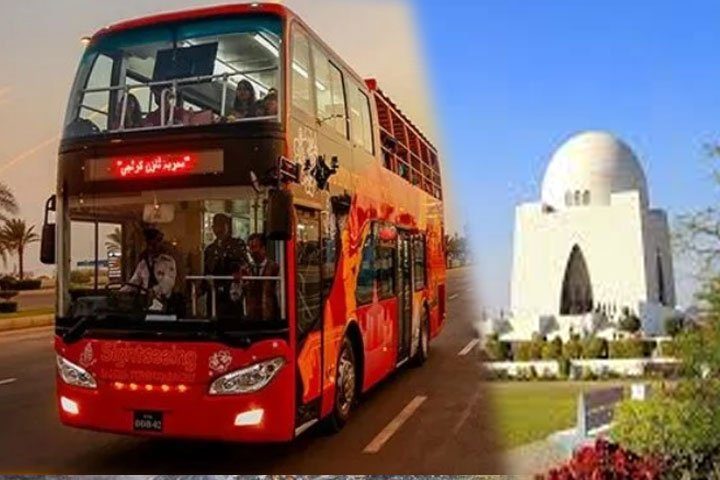
After nearly five decades, double-decker buses have returned to Karachi’s roads, not only providing modern public transport facilities but also reviving fond memories of the city’s past for many residents.
Sindh Senior Minister Sharjeel Inam Memon and Provincial Local Government Minister Syed Nasir Hussain Shah formally inaugurated the double-decker bus service, which is currently being operated on a trial basis from Malir to Shahrah-e-Faisal. During the inauguration, officials briefed the ministers in detail about the buses’ features, safety arrangements, and passenger facilities.
Speaking to the media afterward, Sharjeel Inam Memon said that the promise made to the public has been fulfilled and the double-decker bus service has officially commenced in Karachi. He added that by 2026, citizens will be provided with even more extensive and improved transport facilities to ensure comfortable and dignified travel.
He said that, in line with the directives of the Sindh chief minister, double-decker buses will gradually be introduced on major roads across the city. Emphasizing the need for improved public transport, he noted that around 100,000 passengers are currently using the Peoples Bus Service daily. He added that steps are also being taken to launch bus services in every district of Sindh, while Rs9 billion has been allocated for improving roads in industrial areas.
Sharjeel Memon further said that projects such as the Orange Line and Green Line are already providing relief to Karachi’s commuters, and the provincial government remains committed to introducing additional measures to modernize the city’s transport system.
It is worth recalling that double-decker buses hold a special place in Karachi’s history. During the 1960s and 1970s, these buses operated on major roads such as Saddar, Bandar Road, and MA Jinnah Road, and traveling on the upper deck was considered a pleasant experience, especially for students and young people.
Over time, however, rapid population growth, increasing traffic congestion, and maintenance challenges led to the gradual disappearance of these buses, with minibuses and coaches replacing them. Their return is now being seen by citizens as a positive and welcome development.